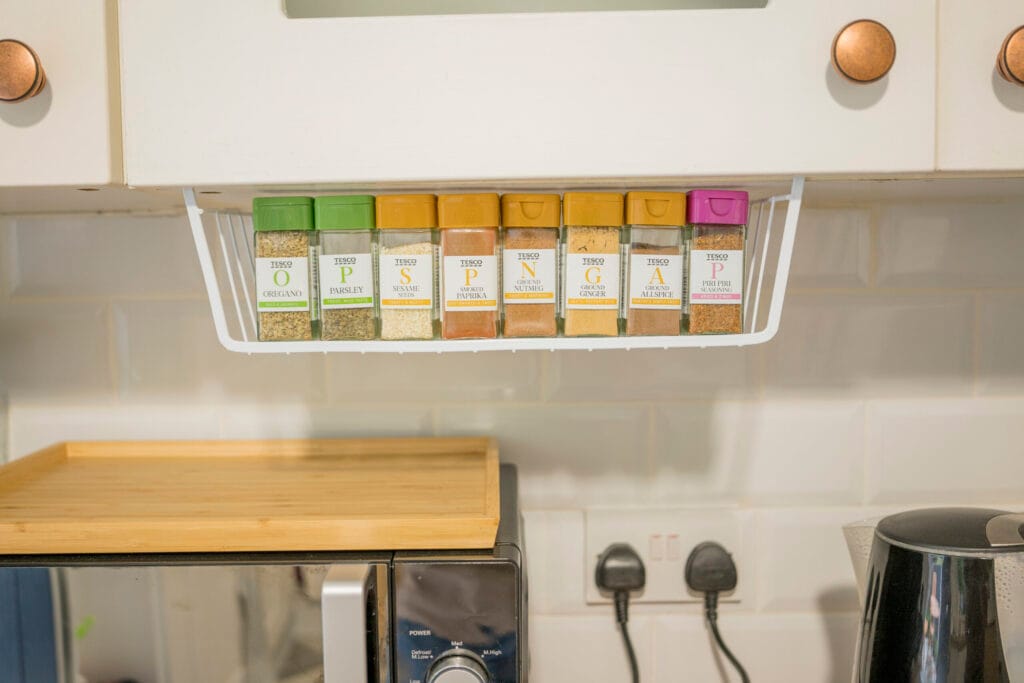
Small apartments can feel cramped long before they are actually full. The problem is often not the number of belongings, but how the room uses visual space, walking space, and storage space. A few practical changes can make a compact home feel calmer and easier to live in without remodeling, replacing major furniture, or spending a lot of money.
This guide focuses on changes that work in ordinary rentals and small homes. The goal is not to make your apartment look empty. It is to make the space work harder while keeping the things you actually use easy to reach.
1. Start with the walking paths
Before buying organizers, look at how you move through the room. A narrow walkway between the sofa and coffee table, a chair blocking a cabinet, or shoes collecting beside the entry can make a small room feel much smaller.
Keep the main routes through the room as clear as possible. If two pieces of furniture serve the same purpose, consider whether one can be moved, folded, or removed. This is usually more effective than adding another storage product.
2. Use the wall space you already have
Small homes often have useful vertical space above desks, counters, doors, and low cabinets. Wall-mounted shelves, hooks, pegboards, and narrow picture ledges can move selected items upward without consuming floor area.
The important part is restraint. Filling every wall with shelves can create another form of visual clutter. Choose one wall or one functional zone and give the items a clear purpose.
3. Make storage match the way you use things
Storage works best when the container is close to the activity. Keep everyday cooking items near the part of the kitchen where they are used. Store cleaning supplies close to the area being cleaned. Put frequently worn shoes and bags near the entrance instead of hiding them in a distant closet.
If your kitchen is the problem area, see our guide to organizing a small kitchen without buying more storage. For pantry problems, our small pantry system covers a more detailed approach.
4. Choose furniture that earns its floor space
In a small apartment, every large object should do a useful job. A storage ottoman can provide seating and hidden storage. A narrow console can act as an entry surface without requiring the depth of a full cabinet. A table with shelves underneath can provide workspace and storage at the same time.
This does not mean every item needs multiple functions. A comfortable sofa that you use every day can be more valuable than a complicated multifunctional piece. The test is simple: does the furniture solve a real problem without making the room harder to use?
5. Reduce visual noise before reducing possessions
A room can look crowded even when it has a reasonable amount of stuff. Open shelves filled with unrelated objects, visible packaging, tangled cables, and too many small decorative pieces all compete for attention.
Group similar items together and give frequently used objects a consistent home. When practical, use matching or visually quiet containers for loose small items. You do not need to hide everything; you simply want the eye to see fewer competing shapes.
6. Use the backs of doors
Door backs are easy to overlook. Depending on the door and rental rules, they can hold lightweight hooks, shoe storage, cleaning tools, scarves, or small baskets.
Keep heavier items off doors that are not designed for extra load, and make sure the added storage does not prevent the door from closing properly. The objective is to reclaim otherwise unused space, not to create a new obstacle.
7. Make the kitchen counter a working zone
Kitchen counters disappear quickly in small apartments. Instead of storing every small appliance on the counter, keep only the equipment used frequently. Group daily items together and move occasional-use tools into a cabinet or higher shelf.
Our small kitchen storage ideas can help when cabinets and drawers are doing too little work.
8. Create a simple entry routine
The entrance is often where small apartments begin to feel messy. Give keys, shoes, bags, coats, and mail defined places. A small tray, a few hooks, and one basket can be enough.
The system should be fast. If putting something away takes several steps, it will probably end up on the nearest chair or surface. Good organization reduces friction rather than adding chores.
9. Use a one-in, one-out rule selectively
You do not need to apply a strict rule to every possession. Use it for categories that grow easily: mugs, storage containers, clothing, shoes, kitchen gadgets, or decorative items.
When something new enters a crowded category, look for one item that is damaged, unused, duplicated, or no longer useful. This keeps storage from slowly filling again after a successful decluttering session.
10. Leave some empty space
Empty space is functional. It gives you room to put something down, open a drawer, clean a surface, or move around without rearranging the entire room.
A common mistake is filling every available shelf and corner simply because the space exists. Instead, treat a little empty capacity as part of the organization system. It gives the room flexibility.
A practical weekend plan
- Walk through the apartment and identify three areas that create the most friction.
- Clear the main walking paths.
- Remove obvious duplicates and things that are no longer used.
- Move selected items from the floor to appropriate vertical storage.
- Give everyday items homes close to where they are used.
- Clear the most visible surfaces.
- Leave some spare storage capacity instead of filling every container.
The goal is a home that is easier to use
Making a small apartment feel bigger is less about clever products and more about reducing friction. Clear pathways, purposeful storage, useful furniture, and fewer competing objects can change the way a room feels without a renovation.
Start with the area that causes the most daily frustration. Solve that one problem well, then move to the next. A small home does not need a complicated organization system; it needs a system that is easy enough to maintain.