Good storage is not simply about having more places to put things. In a small home, the right storage solution should make everyday items easier to find while preserving the space needed to live, clean, cook, and move around.
Start with the storage problem
Walk through your home and identify areas where items are difficult to find or put away. Check the space above cabinets, the backs of doors, unused wall sections, awkward corners, and areas beside furniture.
Also look for storage that is technically available but inconvenient. A deep cabinet may have plenty of capacity while small items disappear at the back. Improving access can be more useful than adding another cabinet.
Use vertical space
Walls can hold shelves, hooks, rails, and narrow cabinets while leaving the floor open. Vertical storage is especially useful in compact kitchens, entryways, bedrooms, and home offices.
Keep frequently handled objects within comfortable reach. Put occasional-use items higher up and avoid making heavy overhead storage difficult to access.
Make awkward corners useful
An unused corner does not always need a large piece of furniture. A narrow shelf, small rolling cart, or a few wall hooks may be enough.
Choose the smallest solution that solves the problem. Filling an awkward corner with a large cabinet can make the room feel smaller even when it adds storage.
Improve deep cabinets
Deep cabinets often waste space because items at the back become invisible. Pull-out bins, shallow containers, risers, or clearly separated zones can make the full depth easier to use.
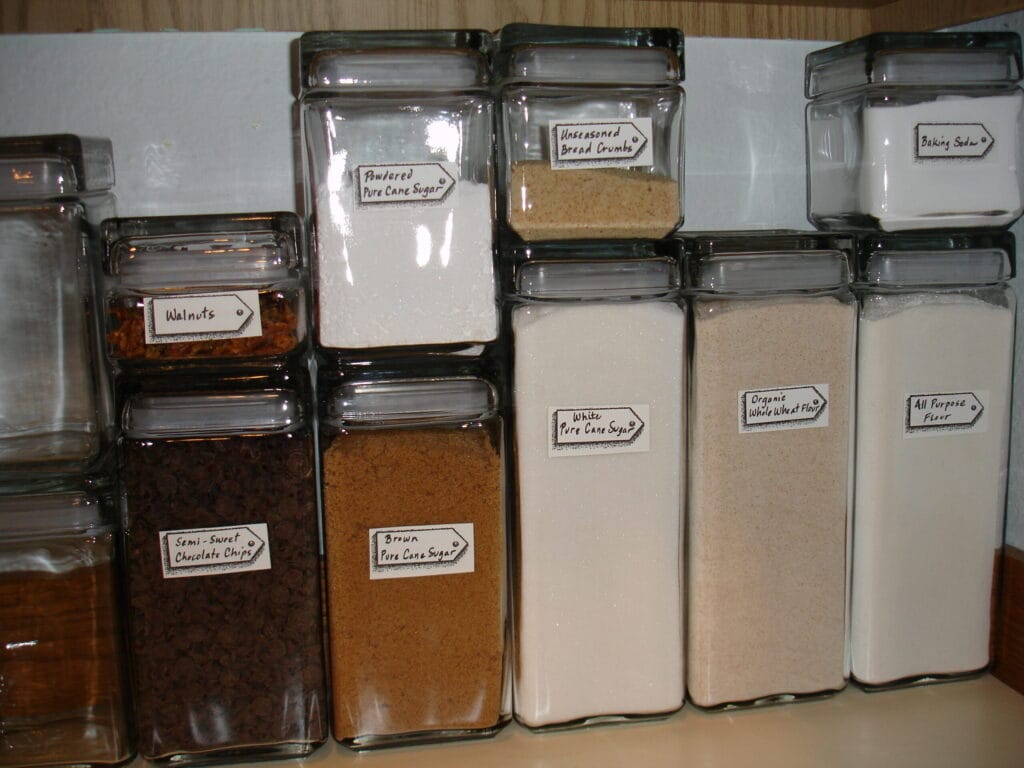
In kitchens, group items by task. Baking supplies, breakfast items, cooking oils, and everyday dishes can each have a practical zone. For more kitchen-specific ideas, see our small kitchen organization guide.
Control small-item clutter
Cords, batteries, stationery, hardware, beauty products, and small kitchen tools become easier to manage when each category has a defined home.
A container should not become a dumping ground. If you cannot describe what belongs inside it, the category may be too broad. Use labels when they genuinely reduce searching.
Choose containers by access
The biggest container is rarely the best container. A very deep bin can hold a lot but may require you to empty half of it to find one item.
For everyday objects, shallow bins and open-top baskets can be easier. Larger lidded containers make more sense for seasonal or rarely used belongings.
Use hidden space carefully
Space under beds, above cabinets, and behind doors can be valuable for items that are not needed every day. Use appropriate containers and keep frequently used belongings in easier-to-reach locations.
Create an entry landing zone
A small entryway can become cluttered because it receives objects from every room. Give keys, bags, shoes, and mail defined places. The system should be quick enough to use when you are tired or in a hurry.
Keep open storage visually calm
Open shelves are convenient, but too many visible objects can make a small room feel busy. Group similar items and leave breathing room between groups.
A few consistent baskets can help with mixed small objects, but storage should improve function first rather than become another decorating project.
Store by frequency of use
Everyday items belong in the easiest locations. Weekly items can be slightly less accessible. Seasonal and rarely used items can live in higher or farther-away storage.
This simple ladder prevents a common mistake: using the easiest cabinet for something you touch twice a year while everyday items are buried somewhere inconvenient.
Leave spare capacity
If every shelf, drawer, and bin is completely full, one new item can disrupt the entire system. A little empty capacity makes cleaning and everyday changes much easier.
Test before spending
Before installing a permanent storage solution, test the idea with something you already own. Use a box as a temporary divider or move a basket to the proposed location for a week.
If the temporary setup makes daily life easier, a permanent solution may be worthwhile. If nobody uses it, you have avoided spending money on an organizer that solves a problem only on paper.
A simple storage audit
- Identify five areas where items are difficult to find or put away.
- Measure the available space before considering a product.
- Remove duplicates and unused items.
- Group the remaining items by use.
- Move everyday items into the easiest storage positions.
- Use vertical or hidden space for less frequent items.
- Keep some spare capacity for normal life.
Storage should make your home easier, not fuller
The best storage solution is often the simplest one that makes a repeated problem disappear. Before buying another organizer, improve access, remove duplicates, use vertical space, and place everyday items close to where they are used.
When storage follows real habits, a small home can hold what you need without feeling like every surface has become a storage unit.