Working from home in a small apartment presents a real challenge: you need a productive workspace but have very little room to dedicate to it. A good small home office does not require a separate room. It requires a deliberate setup that makes focused work possible.
Define the workspace clearly
Even in a small apartment, the brain works better when there is a clear boundary between workspace and living space. A dedicated corner, a specific desk, or even a consistent position at the kitchen table can function as your work zone when it is set up intentionally.
Choose a desk that fits the actual space
Before buying a desk, measure the available wall or corner space carefully. Many desks sold for home offices are too large for small apartments. A wall-mounted fold-down desk provides a work surface when open and disappears when closed. A narrow console-style desk can work along a wall without blocking light.
Manage cables at the beginning
Cables become one of the most visually disruptive elements of a home office. Address cable management when setting up, not after. Cable ties, a small cable box, or simple adhesive clips along the back of a desk can contain most cables without a complicated installation.
Use vertical storage beside the desk
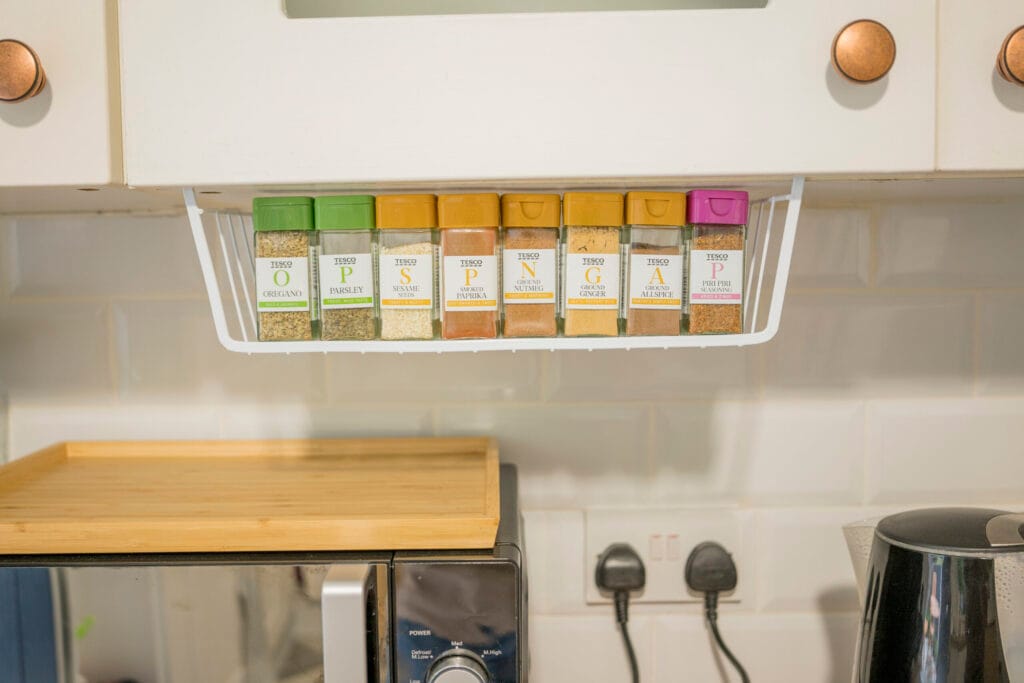
When floor space is limited, walls beside and above the desk become the primary storage area. A floating shelf above the desk can hold reference books, files, and equipment. A pegboard provides flexible hanging storage for supplies, notes, and accessories.
Create a closing routine
At the end of each workday, spend five minutes returning everything to its place: clear the desk surface, close open files, store cables, and return any items that migrated from other rooms. This simple routine helps separate work time from personal time.