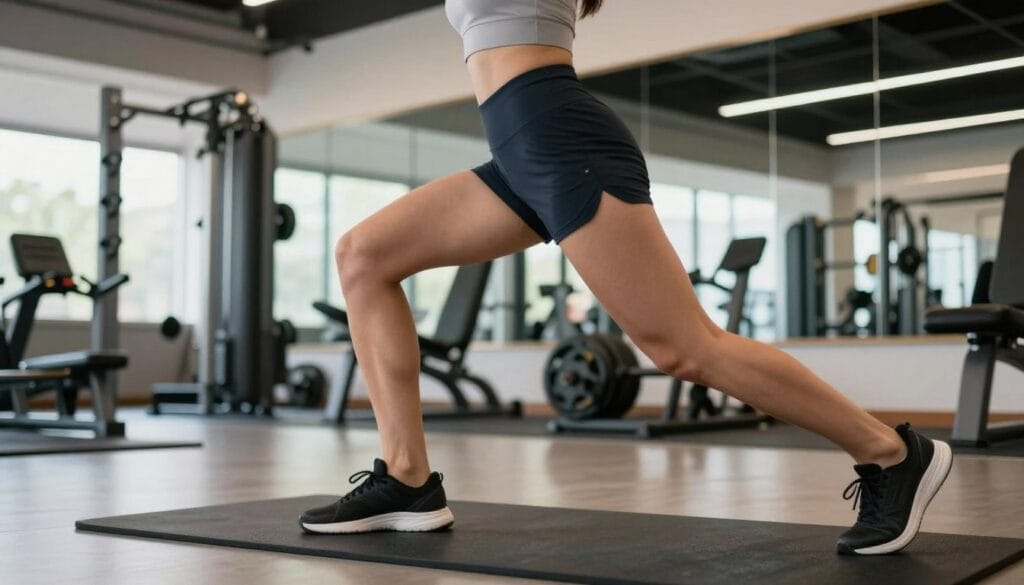
I remember standing in my bedroom a few years ago, trying on jeans I’d bought just six months earlier, feeling that familiar tightness around my thighs. Not painful, just… there. A reminder that whatever I’d been doing wasn’t working the way I thought it would. I’d been going to the gym regularly, doing what the fitness apps told me to do, eating better than I had in years. And yet, my legs looked basically the same.
If you’re reading this, you probably know that feeling. That specific frustration of working hard and not seeing the changes you want in the places that matter most to you. It’s not about vanity, really. It’s about wanting your effort to match your results. It’s about feeling like your body should respond to the work you’re putting in.
The thing about wanting slimmer legs is that it’s one of those goals that sounds simple but turns out to be surprisingly complicated. We’re told to eat less and move more, to do more cardio, to lift weights, to stop lifting weights, to do this workout or that challenge. The advice is everywhere and it all contradicts itself. And most of it doesn’t actually work, at least not in the way we hoped.
I’m not a personal trainer or a nutritionist. I’m just someone who spent way too much time trying to figure this out, making mistakes, learning what actually matters, and eventually finding an approach that made sense. What I want to share with you isn’t a magic solution or a guarantee. It’s just what I’ve learned about why this is so hard and what actually seems to help.
Why Your Legs Don’t Slim Down the Way You Expect
Here’s the first thing I had to accept: our bodies don’t lose fat where we want them to. You probably already know this intellectually, but it’s different when you’re living it. You can do a thousand leg exercises and your thighs won’t necessarily get smaller. That’s not how spot reduction works, because spot reduction isn’t real.
Your body has a pattern for how it stores and releases fat, and that pattern is largely genetic. Some women lose weight from their upper body first. Some lose it from their waist. Some of us hold onto leg fat until the very end, no matter what we do. It’s frustrating, but it’s also just biology.
But there’s more to it than genetics. The type of exercise you do actually affects how your legs look, and this is where a lot of women get stuck without realizing it. I spent months doing heavy squats and lunges because I’d read that strength training was the answer. And yes, I got stronger. But my legs also got bigger, not smaller. The muscle built up underneath the fat, and suddenly my jeans fit even worse than before.
This doesn’t mean strength training is bad. It just means that not all strength training is right for this specific goal. If you’re doing exercises that build bulk in your quads and hamstrings, especially with heavy weights and low reps, you’re probably adding size even as you’re trying to slim down. For some women, that’s exactly what they want. For others of us, it’s the opposite of our goal.
Then there’s the cardio question. I used to run three or four times a week, convinced that burning more calories would eventually slim my legs. Sometimes it helped a little with overall fat loss, but my legs stayed stubbornly thick. I later learned that the type of cardio matters too. High-intensity interval training, sprints, heavy cycling, these all tend to build leg muscle. Long, steady cardio at a moderate pace is generally better for slimming, but even that only works if everything else is in place.
The truth is, finding the best program for slim legs isn’t about doing one magic exercise or following one trendy diet. It’s about understanding your body type, choosing the right kind of exercises, and being consistent with an approach that actually matches your goal.
The Mistakes I Made (And You Might Be Making Too)
When I look back at all the time I wasted, most of it came down to a few specific mistakes. I’m sharing these not to make you feel bad, but because recognizing them helped me finally move forward.
The first mistake was thinking that working harder automatically meant better results. I thought if I just pushed myself more, did more reps, lifted heavier weights, ran faster, my body would have to change. But intensity without strategy just led to exhaustion and, in my case, bigger legs. I was building muscle I didn’t want and not addressing the fat I did want to lose.
The second mistake was not eating enough. I know that sounds backward, but hear me out. I’d cut calories pretty drastically, thinking that was the fastest path to slim legs. And yes, I lost some weight. But I also felt terrible, my energy crashed, and my body seemed to hold onto fat even more stubbornly. I later learned that eating too little can slow your metabolism and make it harder to lose fat, especially in stubborn areas like thighs and hips. Your body needs adequate nutrition to actually let go of stored fat.
The third mistake was doing random workouts without a real plan. I’d try a YouTube workout one day, go to a spin class the next, do a strength session after that. It felt productive, but there was no real structure or progression. I wasn’t following a program designed for my specific goal. I was just moving and hoping something would work.
And maybe the biggest mistake: I didn’t account for my body type at all. I’m naturally more of a mesomorph, meaning I build muscle fairly easily. What works for someone who struggles to build any muscle at all wasn’t going to work for me. I needed a different approach, one that acknowledged how my body actually responds to exercise.
If you’ve been spinning your wheels like I was, it’s probably not because you’re not working hard enough. It’s because the approach doesn’t match your body or your goal.
What Actually Seems to Work
After a lot of trial and error, I finally found an approach that made sense. It wasn’t dramatic or flashy. It was actually pretty simple, which is maybe why I’d overlooked it for so long.
The core idea is this: combine the right type of cardio with the right type of resistance training, while eating in a way that supports fat loss without tanking your metabolism. That’s it. But the details matter a lot.
For cardio, I shifted to longer, lower-intensity sessions. Walking at a brisk pace, light jogging, using the elliptical at a steady rhythm. Nothing that felt like I was sprinting or pushing to my absolute limit. The goal was to burn calories and encourage fat loss without building bulk in my legs. I aimed for at least 30 to 45 minutes most days, sometimes more. It wasn’t exciting, but it worked.
For resistance training, I changed everything. Instead of heavy squats with a barbell, I focused on bodyweight exercises or very light weights with higher reps. Things like walking lunges, glute bridges, leg lifts, resistance band work. The goal was to tone and strengthen without adding significant muscle size. I also made sure to balance leg work with upper body work, so I wasn’t overemphasizing my lower body.
I also started paying attention to which exercises made my legs feel pumped and swollen versus which ones left them feeling lean and worked. The pumped feeling usually meant I was building muscle. The lean feeling meant I was on the right track.
Nutrition-wise, I stopped restricting so hard. I ate enough protein to maintain muscle in the places I wanted it, enough carbs to fuel my workouts, and enough overall calories to keep my metabolism functioning. I focused on whole foods, stayed hydrated, and tried to be consistent rather than perfect. The fat started coming off slowly, but it actually came off and stayed off.
This combination, cardio for fat burning plus targeted resistance training that doesn’t add bulk, is really the foundation of any good program for slim legs. But doing it on your own, without guidance, can still be tricky. You have to know which exercises to avoid, how much cardio is enough without being too much, and how to eat in a way that supports your goal without making you miserable.
A Program That Actually Gets It
At some point, I realized I needed more structure than I could create for myself. I needed a program designed specifically for women who wanted leaner legs, not just general fitness advice.
That’s when I came across Rachael Attard’s approach. She’s a trainer who specifically works with women who want to slim down their legs, and she talks a lot about body types and how different bodies need different strategies. I was skeptical at first, honestly, because I’d tried so many things. But her approach made sense in a way that other programs hadn’t.
Her programs focus on the exact combination I’d been trying to figure out on my own: the right kind of cardio, the right kind of resistance work, and eating in a way that actually supports lean legs. She also breaks it down by body type, which was huge for me. If you’re someone who builds muscle easily, she has specific recommendations. If you struggle to lose fat in your lower body, she addresses that too.
I’m not saying it’s the only option out there, but it’s one of the few programs I’ve found that’s actually designed around this specific goal rather than just general weight loss or muscle building. If you’ve been struggling and nothing else has worked, it might be worth looking into. You can check out what she offers here if you’re curious.
What I appreciated most was that it didn’t promise overnight results or claim to be easy. It was just a clear, structured plan based on how women’s bodies actually work. And for me, that clarity was what I’d been missing.
Being Realistic About What’s Possible
I want to be honest with you about something: slimming your legs takes time. If someone tells you that you’ll see dramatic changes in two weeks, they’re either lying or selling something. Real changes, the kind that last, happen over months, not days.
Even with the right program, you’re still working against genetics, hormones, and years of habits. Some women will see changes faster than others. Some will find that their legs slim down relatively easily once they’re doing the right things. Others will have to be incredibly patient and consistent.
There were weeks when I felt like nothing was changing. I’d look in the mirror and see the same legs I’d always had. But then I’d notice my jeans fitting a little differently, or I’d see a photo from a month earlier and realize there was actually a difference. Progress isn’t always visible day to day. Sometimes you only notice it when you look back.
You also have to be willing to accept that your legs might not ever look exactly like you imagine. If you’re naturally curvier or muscular in your lower body, you might slim down but still have shape there. And honestly, that’s okay. The goal isn’t to erase your natural body type. It’s to be the healthiest, leanest version of your own shape.
What You Should Do Next
If you’re serious about finding the best program for slim legs, you need to start by being honest with yourself about what you’ve been doing and whether it’s actually working. If you’ve been doing the same workouts for months and seeing no change, something needs to shift.
Start by evaluating your current routine. Are you doing a lot of heavy leg exercises? Are you doing tons of high-intensity cardio? Are you eating enough, or have you been restricting too hard? Write it down if that helps. Just get clear on where you actually are.
Then, think about whether you want to figure this out on your own or follow a structured program. There’s no wrong answer. Some women love the process of experimenting and learning. Others just want someone to tell them exactly what to do so they can focus on doing it.
If you want structure, if you’re tired of guessing, if you just want a plan that’s designed for this exact goal, I’d really recommend looking at what Rachael Attard offers. Her programs are specifically built for women trying to slim their legs, and they take body type into account, which makes a huge difference. You can learn more here and see if it feels right for you.
If you’d rather go it alone, that’s completely valid too. Focus on lower-intensity cardio, avoid exercises that bulk your legs, eat enough to support your metabolism, and be patient. Track your progress with photos and measurements, not just the scale. And give it time.
Final Thoughts
I don’t think there’s one perfect program that works for everyone. Bodies are too different, goals are too personal, and life is too complicated for that. But I do think there are principles that work, approaches that make sense, and programs that are designed with real understanding of what women actually want.
The best program for slim legs is the one that matches your body type, fits your life, and is based on sound principles rather than hype. It’s the one you can actually stick with long enough to see results. For me, that meant finding structure and guidance instead of just trying random things and hoping.
Whatever path you choose, I hope you find something that works. I hope you stop feeling frustrated and start feeling like your effort actually matters. And I hope you’re kind to yourself along the way, because this stuff is harder than it looks and you’re doing your best.
Your legs are part of your body, and your body is doing a lot for you every single day. It deserves an approach that respects it, supports it, and actually helps it become what you want it to be. You’ll figure it out. It just takes the right information and enough time.